
Your Pain.
Biological Assessment & Report
As part of my osteopathic practice, research, and education experience with Chronic Pain, I provide an assessment and report that grounds in biology the pain you are enduring
The report bridges a knowledge gap for you and your medical team by describing the probable ways the nerves (nociceptors) that lead to pain are being activated based on your experience.
When there is no obvious reason or other explanatory diagnosis the report provides plausible biological reasons your pain persists. Read more …
Integrated Information for Complex Needs
Chronic pain often presents without a reason that healthcare practitioners can fully understand. Modern approaches for pain assessment and treatment without a biological foundation too readily connect your pain to your mood, attitude, education, or concurring conditions like anxiety, and many other factors.
Supported by contemporary science, the report I provide describes the known and theoretical biological mechanisms of nociception (specialized nerves related to pain sensation) that operate independent of other life considerations.
Having that foundation can help you and your health team seek diagnosis and/or clinically assess appropriate treatments and management strategies.

In-person and remote consultations
Two appointments are required. The first to gather information about health and pain history, prior diagnosis and treatments, prior strategies, current presentation, concerns, and life impacts.
I will write the report prior to the second appointment where we can review it to ensure it accurately represents our discussion, the biological basis for persisting pain, and clearly articulates any asks.
After review I will finalize the report and send it to you for final approval before sending it to your doctor or specialist.
Virtual appointments are through a secure booking connection that has no recording function.
In-person consultation or treatment appointments are at Rise Physio in Shelburne, Ontario.
My Approach
When you tell me you have pain, my first assumption is that the specialized nerves for the sensation of pain (nociceptors) are activated.
How is that different from other approaches?
This approach assumes biology first, which means that co-morbid conditions, mental health considerations, activity levels, or postural considerations and the like are not implicated as causal. It’s not that these factors aren’t important. Clearly they are, but they are not causal for pain and should not be targeted specifically as treatments for pain. These factors may be essential for overall management depending on your needs, but if you’ve had chronic pain for a while, they are likely considerations you’ve already addressed to some degree.
Why biology first?
The people with chronic pain I encounter in my practice are seeking answers, treatments, or just some sort of relief for their pain and are not getting what they need. The longer a person has persistent pain, the less likely they are to engage with any healthcare. Pain care is significantly hampered by practitioner lack of knowledge of mechanisms and management across all aspects of healthcare. This documented deficit may be one of the reasons an endless variety of offerings for pain treatment and promised relief exist, even while the numbers of people with chronic pain (about one in 4 or 5) continues without change. It is also why many people with chronic pain may feel unheard, dismissed, or ignored.
Pain care is already lagging behind the contemporary science of pain, and various social determinants including racism, gender and sexuality, poverty, culture, and many more compound this deficit and lead to further inequity in care. Some populations are much less likely to be believed and much more likely to be dismissed without investigation. It can take years for some people to even be considered for investigation.
How does the report help?
The report I provide takes inequities into account in part by relating your presentation to the biological mechanisms of nociception, and the physiology of intersecting systems and conditions. It gives your doctor or health team a solid biological reason your pain persists, may need further investigation for conditions that have not been considered, or can be resistant to the variety of popular but, on average, ineffective treatments.
Will the report help my pain go away?
Not directly, but it will hopefully lead to you and your healthcare team to seek further diagnosis if needed, and review treatment strategies with realistic expectations of when, how, and even if they can help. Grounding your pain in biology can help you understand that the pain you have, seemingly without connection to a cause, is in part due to an adaptative survival mechanism because at one time having more pain was ultimately less lethal than having less. That’s not the case now, but while your pain persists it’s good to know that it isn’t your fault.
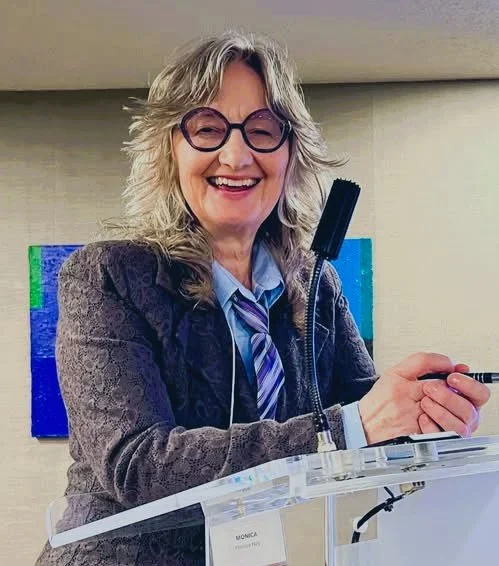
Monica Noy, BSc (Ost.), MRSc
Education
Master of Science, Rehabilitation | McMaster University | Hamilton,
Honours Bachelor of Science, Osteopathy | British College of Osteopathic Medicine Academic Conversion Program | London Metropolitan University
Diploma, Osteopathic Manual Practice | Canadian College of Osteopathy
Diploma, Registered Massage Therapy | Sutherland-Chan Schools Inc.,
Editing Certificate | George Brown College | Toronto, ON CA
Bachelor of Arts | Swinburne University of Technology | AUS
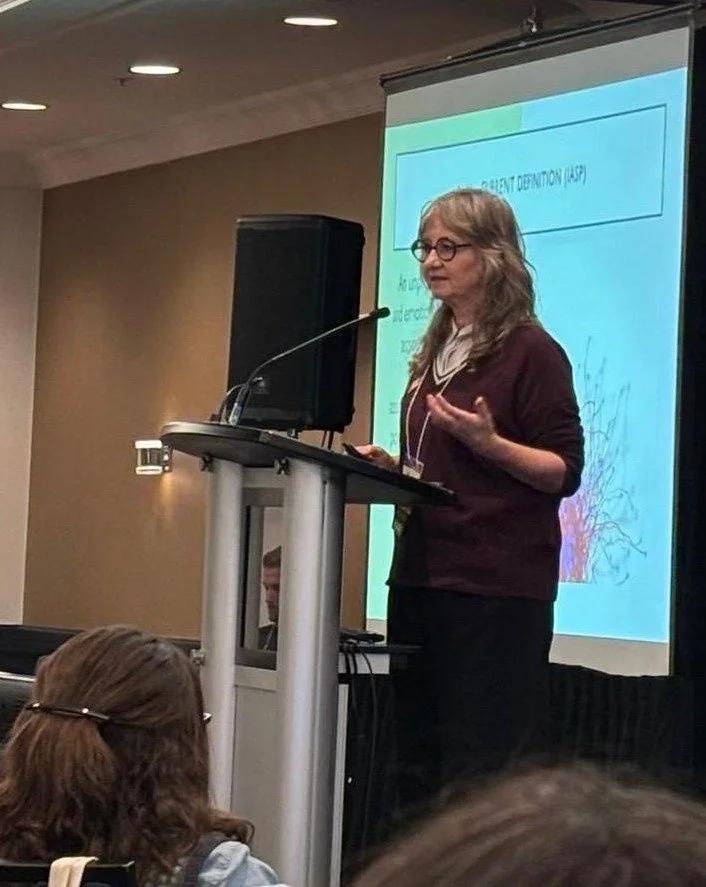
Published Research
Weisman, A., Noy, M., & Masharawi, Y. (2026). The pain education paradox and validation gap. Musculoskeletal Science & Practice, 81, Article 103476.
Pelletier, R., Morin, C., Noy, M., Thomson, OP., Sundberg, T., Leach, MJ. (2024) A national cross-sectional survey of the attitudes, skills and use of evidence-based practice amongst Canadian osteopaths, International Journal of Osteopathic Medicine, 100721.
Noy, M. (2024). Advancing osteopathic education in Canada: New offerings, new direction. International Journal of Osteopathic Medicine, 51, 100697-.
Lebert, R., Noy, M., Purves, Ms., & Tibbett, P. (2022). Massage Therapy: A Person-Centred Approach to Chronic Pain. International Journal of Therapeutic Massage & Bodywork, 15(3), 27–34.
Noy, M., Macedo, L., & Carlesso, L. (2020). Biomedical origins of the term “osteopathic lesion” and its impact on people in pain. International Journal of Osteopathic Medicine, 37, 40–43.
Current Research Projects
Canada OPERA Survey | National Survey of the Status of Osteopathy in Canada using the Osteopathic Practitioners Estimates and RAtes (OPERA) questionnaire. Organized through University of Quebec in Montreal (UQAM), CA
Establishing Expert Consensus on Core Competencies and Best Practices in Osteopathic Training: A Delphi Study | To provide an evidence-informed framework as a guide for curriculum development to enhance graduate readiness for clinical practice. Organized through RMIT University, Victoria, AUS
Osteopaths’ Therapeutic Approaches Questionnaire (Osteo-TAQ) Canada | Measures the multidimensional aspects of osteopathic care. Organized through the Centre for Osteopathic Research and Leadership (CORaL), Health Sciences University (HSU), UK
Working Title: Philosophy and Science of Pain: Musculoskeletal Undergraduate Curriculum. Outline, scientific rationale, and logical content structure for a full-semester, undergraduate-level course on the mechanism and management of musculoskeletal pain. The curriculum is informed in part by the Sheridan, Canada, Philosophy and Science of Pain course, believed to be the first program of its kind. International collaboration, Tel Aviv University.
Experience
Professor / Course Developer | Sheridan College | 2020 - Present
Independent Researcher and Peer Reviewer | 2019 – Present
President, Ontario Association of Osteopathic Manual Practitioners
Pursuit of Regulation of Osteopathy in Ontario
Osteopathic Manual Practitioner | 2010 - present
Instructor (MT) / Course Developer / Con-ed | 2007 - Present
Registered Massage Therapist | 2003 - 2022
Example Report Content
History and Co-morbid Conditions
When someone has chronic pain they generally have more than one associated condition that may explain some symptoms. How they overlap can make further diagnosis difficult where the conditions are not fully explanatory of the pain.
The concurring groups of signs and symptoms likely overlap more than one condition. The recent diagnosis of [condition] is also associated with comorbid symptoms or conditions of [list of overlapping current symptoms] and is not completely explanatory for the widespread chronic pain and increasing symptom list.
The headaches described have characteristics of [type of headache previously described in a symptom list], but their consistency doesn't appear to fit either category. A headache specialist will be more versed on the variety of headaches that exist, their symptom crossover, and available treatments.
Complications and possible barriers to recovery include a history of [list of co-morbid conditions] and ongoing life stressors including [mental health considerations].
Associated musculoskeletal considerations (may be listed) include: constant mid-back pain that gets worse with the [condition]; multi-joint pain that started getting worse with the [condition, injury]; spontaneous self adjusting of spine related to growing back tension and [symptom onset] but with minimal relief.
Prior to the [illness label or other] diagnosis some autoinflammatory or autoimmune conditions that may be explanatory of some symptoms were not ruled out.
Biological Grounding
Contemporary neuroscience supports the necessity of nociception. Describing possible mechanisms involved in pain, especially when it persists without apparent reason or explanatory diagnosis helps to ground your experience.
Along with chronic pain, [Name] presents with allodynia [description of where/what stimulus]. This indicates altered nociception where pain can be elicited by stimuli normally considered non-noxious.
The neuropathic mechanism indicates probable boney or soft-tissue compression of neural tissue leading to sensory and motor symptoms related to [area]. The nociplastic mechanism indicates altered nociceptive processes evidenced by allodynia and hyperalgesia in [the area of concern].
[Person] presents with hyperalgesia, allodynia, and other sensory and systemic sensitivities [describe or described] that indicate ongoing, widespread altered nociceptive processing. Inflammatory related conditions that have not been ruled out include [list conditions]
Contemporary studies are showing bidirectional cellular communication between nociception, immune, digestive, and endocrine systems. Though [condition] is not a primary inflammatory condition it often overlaps with [type of] inflammatory and immune related conditions.
The extent of the symptoms and ongoing pain appears to indicate both altered immune and altered nociceptive function.
Connections and Impact
Going from one specialist to another means your history and the impact is fragmented and the whole picture gets lost. Treatment suggestions can be made on current issues in isolation. The report provides a compact, whole context-dependent picture.
[Name] is consistent with [type of treatment] recommended for resolution of the issue and has been for [length of time], but symptoms have not improved and are trending worse.
Average pain rating is [eg. 5/10] and impacts [quality of life considerations]. Flare up pain rating is [9/10] and leads to significant [quality of life impacts].
The concussion-type headaches are recognized by [Name] as distinctly different from migraine type but they may be concurrent or divergent in occurrence.
My assessment did not include physical movement or manual assessment. [Person] reports that manual therapy is painful and can result in exacerbation of some symptoms. As well, the physiotherapy exercises recommended for [related condition] over [time] have not made an appreciable difference for the pain
Documented delays in diagnosis for [condition] are significant in this population and can lead to decline in [quality of life considerations] and an increase in personal cost.
The initial goal is to establish if further diagnosis is warranted in the absence of pain resolution and in the worsening of [described] symptoms in order to establish an effective treatment/management plan.
FAQ - Clarity Backed by Know-How
5
6
At least two appointments are optimal to get a comprehensive history, current symptoms, and impacts. and a detailed, approved report.
How many appointments are required?
1
Who is best served by this report?
What about physical treatment?
The booking links above will take you to the booking site where you can choose type of appointment required.
How are the appointments booked?
2
You will receive a report of our conversation that is generally not more than two pages that you or I can provide to each specialist you see outlining your issues and asks. From there doctors might hone in on specific symptoms depending on the specialty, but they can do so in a whole history context. Reports can also be sent directly to other members of your healthcare team as requested.
What is my take away?
3
Can the report be updated?
4
Of course. Book another appointment and I can update the report with current symptoms, diagnosed conditions, and treatments tried. It should only require one appointment.
People of all ages with chronic pain who have been given generic guideline advice by their doctors, have completed multiple conservative allied treatments, but have not been referred for diagnosis or further investigation despite ongoing pain and/or worsening symptoms. Populations often most affected are young people, and those with peri-menopause or post-menopause. Hormones can have a big impact, but are not explanatory in themselves.
Osteopathic treatment, like other manual or physical therapies can be useful for immediate post-treatment pain relief, but given the nociceptive mechanisms in chronic pain it can also lead to temporary flare up of symptoms. My advice with any therapy is to treat it as a management tool. A few treatments that offer post-treatment pain relief can be enough to get you back to manageable, but more doesn’t mean that it will get you to 0 out of 10. Use it as needed. Stop if it’s not helping and give it a break until you need it again.